

Like document management platform, one of the phrases we hear most often is: “I find it hard to disconnect from work”.”. And this is no coincidence. We live in an era hyperconnected, where the mobile phone vibrates at all hours and emails arrive even on weekends. Learning to disconnect from work is no longer just mental health advice: is a professional necessity.
Mental overload starts with operational chaos
Many professionals are unable to disconnect from work not because they don't want to, but because they cannot. They end the day knowing that tomorrow everything will start all over again: unidentified documents, unclear processes, manual dependencies that prevent them from letting go of control.
Since we implemented our own platform internally, we have found that automate tasks
documentaries not only improves efficiency, but also frees up mental space.. Because not having to remember every step, every revision, every dispatch, is an invisible but powerful relief.
Automate to liberate, not to demand more
Learning to disconnect from work is not by doing less, but by making it possible to the repetitive does not rob us of what is important. Automation is sometimes confused with pressure to produce more. We see it as a bridge to healthier work. One where you can go home (or close your laptop) knowing that the processes are still running even if you are not present.
This feeling of trust and control is the one that allows you to really rest. Because when you know that a system takes care of the basics, you can focus on the strategic... and then just switch off.
Disconnection starts during the day, not after it.
One of the biggest misconceptions about “switching off from work” is that it is something that only happens at the end of the day. The reality is that, if during your day you accumulate stress due to untidy tasks, If the EU is to be able to provide a real disconnection afterwards, constant requests and manual tracking of documents, it will be impossible to achieve a real disconnection.
From our perspective, it's not just when you finish working that makes the difference, it's how. If every task is closed, if every document is in its place, if the tracking of signatures and approvals does not depend on mental reminders or endless threads of emails, then you can end your day with a clear mind.
Learning to disconnect from work is a skill (and it can be trained).
Nobody is born knowing how to disconnect. Even less so in an environment where being available seems an unspoken requirement. But like any habit, it can be trained. We encourage our clients to think of disconnecting as a part of their working culturenot as a luxury, but as a strategy.
Automating workflows, scheduling automatic reminders, establishing clear routes for storing and accessing documents... these are small decisions that reduce friction and allow you to work better. And working better, in this case, means also better living.
Where to start? Here are our basic keys:
- Automate repetitive tasks to free up real time
- Organise your documents in an accessible environment
- Eliminates unnecessary dependencies in workflows
- Prioritise clarity: every process must be visible and understandable.
- Success is also measured by the ability to close the day without stress.
7 recommendations for disconnecting from work
Throughout our history of helping teams organise their information, we have identified some habits that make a real difference in achieving digital disconnection. Here we share with you 7 recommendations that combine technology and good personal practices:
- Centralise your documents on a single platform accessible from any device. → It allows you to find what you need effortlessly, avoiding last minute stress.
- Automate repetitive tasks such as reminders, validations or document submissions. → It frees your mind from constant reminders and helps you close the day with peace of mind.
- Uses clear and shared workflows, so that each team member knows what needs to be done, when and with what documentation. → Reduces the burden of having to keep track of the status of each process.
- Disable notifications outside working hours of your digital tools, including your document manager. → Avoid interruptions and break the “always on” cycle.
- Make time for closure of daily tasks, and keep track of what's pending in a well-organised digital environment. → It allows you to disconnect knowing that everything is recorded and nothing is left up in the air.
- Prioritise collaborative online formats, Avoid duplicate versions or loss of information. → Minimise errors and reduce the doubts that can haunt you outside working hours.
- Disconnect from the physical and digital environment at the end of the dayClose tabs, log out and leave your workspace tidy. → You associate external order with real mental closure, which makes it easier to really rest.
It's not about control, it's about trust
In some teams, document scanning is still perceived as a way to have more control over the work. We prefer to talk about trust. When everyone knows where documents are, which processes are active, and which tasks are queued, the need to keep track of everything is reduced.
Disconnecting from work is easier when you don't have to constantly check if “everything is fine”.”. Our platform provides that peace of mind: not because it monitors people, but because it frees teams from the fear that something will be lost or left undone..
What if switching off became a metric of success?
Imagine a work environment where success is measured not just in deliveries or hours logged on, but in the ability of teams to close the day without anxiety. We believe that this is where modern management should be moving. A healthy work system has to deliver results without sacrificing well-being.
In our experience, when document management is correctly digitised, it is not only productivity that is gained. You gain time, clarity, autonomy and, most importantly, earns the right to disconnect. Because when the system works, rest ceases to be a privilege and becomes routine.
Want to disconnect better? Start by organising
If you or your team feel that disconnect from work is becoming more and more difficult, maybe you don't need more willpower... you need more willpower... but a better structure. A document management platform is not only a productivity tool, it is a silent ally for personal and professional balance.
We encourage you to rethink the way you work. And if you need support, we are here to help you start that change. Because we do, disconnecting from work is possible. You just need the right environment.
Other articles that might interest you
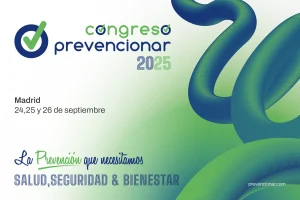
Quioo at the 5th International Congress Prevencionar 2025